facebook logo, please click to access our facebook page YouTube logo, please click to open our youtube page  Instagram logo, please click to open our instagram page

WellFed Cornwall: Better Health Through Local Food

Since launching last autumn, WellFed Cornwall has supported 47 people living with type 2 diabetes or prediabetes with weekly boxes of locally grown vegetables, practical food skills and opportunities to connect with their community. Early feedback has been very positive, and with more pilots launching this summer, the programme is already showing the difference local healthy food can make. 
Background 

WellFed is a ‘test and learn’ pilot research partnership between local NHS providers, sustainable food growers, voluntary and community sector organisations (VCSE) and Cornwall Council Public Health. 

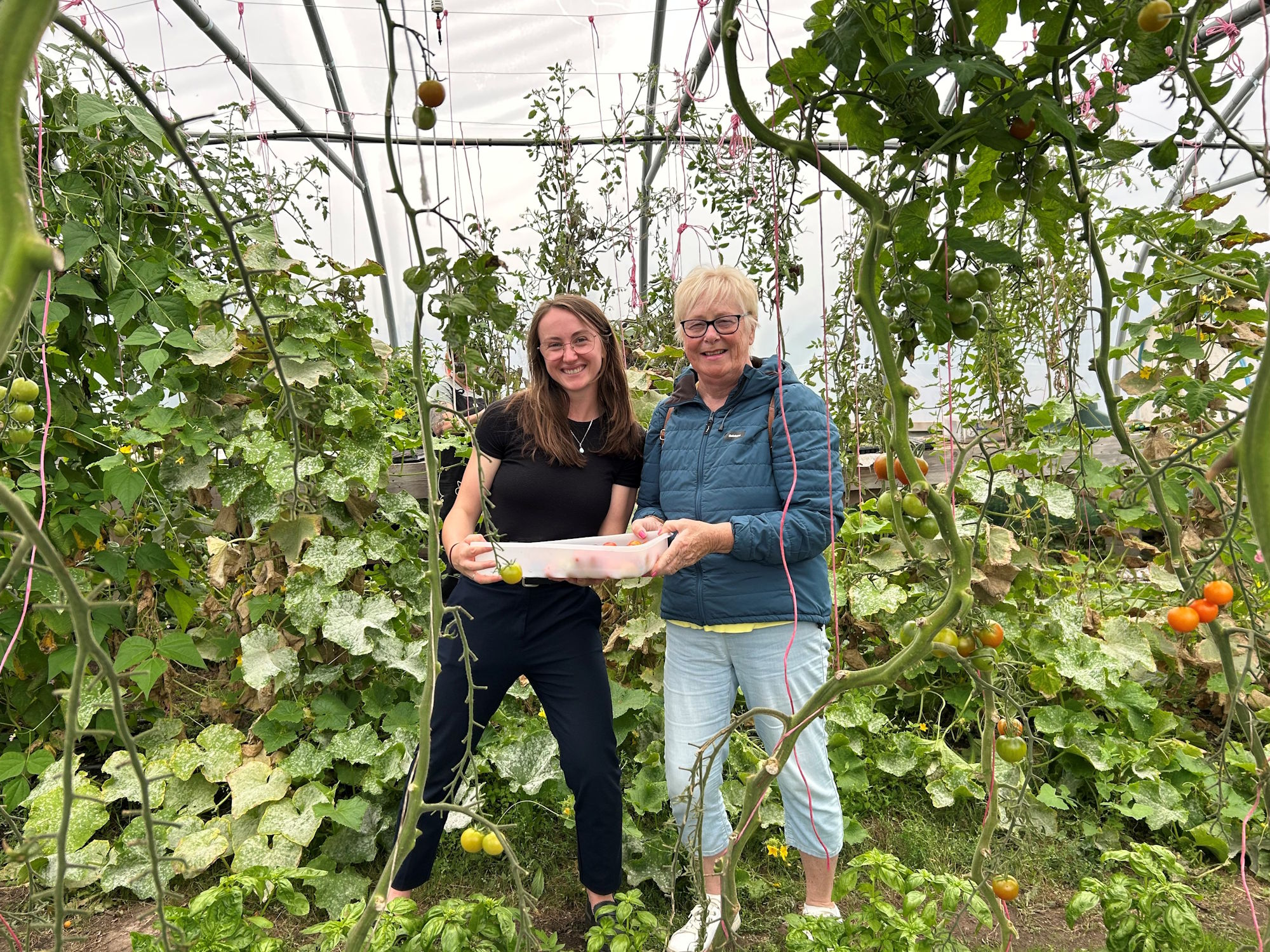
Each pilot provides people living with type 2 diabetes or prediabetes with a free weekly box of locally and agroecologically grown vegetables, alongside 12 weeks of tailored support. This can include vegetable preparation, growing and cookery skills to build confidence with new foods, as well as opportunities to join community food activities that increase social and nature connection, boost physical activity and strengthen community engagement. 

So far, pilots have taken place in St Agnes, Redruth, Penzance, Helston, Camborne, Hayle and Newquay. 

Over the coming weeks and months, new pilots will continue to launch from the Isles of Scilly and St Just in the west to Camelford and Liskeard in the east.  

As the programme expands, more data are being gathered to evaluate the impact of WellFed and assess the potential return on investment of a wider rollout. Initial findings from the first three pilots will be published in early summer, with a full evaluation of more than 20 pilots due in early 2027. 

Better health, wellbeing and connection 

WellFed is expected to deliver positive impacts on physical health, including (but not limited to) improved diabetes outcomes, alongside wider gains in wellbeing, confidence and community connection. 

Through the programme, the aim is to demonstrate that WellFed, or similar foodbased support models, could offer a powerful way to tackle rising rates of metabolic disease, reduce health inequalities and ease pressure on local health services. 

A stronger local food system for Cornwall 

By working with local agroecological growers and community food partners, WellFed is helping to show how a wider rollout could strengthen Cornwall’s local food system and support planetary health, with investment in nature and climatefriendly food production reducing reliance on carbonintensive medical interventions and building resilience across communities. 

It is still early days, but initial feedback and emerging results are encouraging. Participants from the autumn Redruth pilot have shared their experiences here: 


WellFed is delivered by Volunteer Cornwall and is a partnership project involving Cornwall Council Public HealthNHS CIoS, and VCSE organisations including Cornwall Voluntary Sector Forum (VSF)Sustainable Food CornwallActive Cornwall, and a countywide network of delivery partners from organic and agroecological farms to community kitchens and community hubs. 

For further information, visit WellFed – Health and Climate Resilience | Volunteer Cornwall or email This email address is being protected from spambots. You need JavaScript enabled to view it. 


.
The value of volunteers

Volunteers Week, June 2026

The value of volunteers

Rae Hall, Chief Executive Officer, Volunteer Cornwall

As a newcomer to the voluntary sector, discovering the richness and scale of voluntary action in Cornwall continues to be a delight and a revelation. It is the most extraordinary gift to give your time as a volunteer, and I have met some inspirational people from diverse backgrounds.

There are popular myths and stereotypes around volunteering that I am happy to take this opportunity to debunk:

Not all volunteers are retired! I have met people of all ages and backgrounds – students, teachers, psychologists, gardeners, doctors… very often they are already busy people but want to give something back.

Volunteers are not free! From recruitment and co-ordination to deployment and ongoing support, this requires an infrastructure and investment.

Volunteers are not untrained! We invest in people to make sure that they and those they support are safe, and that volunteers are skilled and trained appropriately.

It’s not all tea and cake! Volunteering can take many forms – supporting people who have had a Stroke to become mobile again, driving children to school, transport to medical appointments, supporting people with complex needs to make positive forward steps, working with whole families in areas of high deprivation to unravel complicated daily challenges, and even being the hand-holder, literally and metaphorically, for someone at the end of life.

Having said it’s not all tea and cake – I am looking forward to volunteering in one of Royal Cornwall Hospital Trust’s cafes this week! I enjoy the chance of a chat and meeting new people – a cuppa is a great conversation opener.

Volunteering benefits the volunteer as much as the person being supported - it is great for our own health. Research from the National Council for Voluntary Organisations shows that volunteering can decrease blood pressure, improve mental health, increase the likelihood of adopting healthier lifestyles and improve disease management.  Other benefits reported are making a difference, feeling less isolated, improving job prospects and making new connections. The biggest reported benefit is feeling joy. In a world that can feel quite dark at times, joy is something we all could use.

In Volunteer Cornwall alone, we have over 1,200 volunteers registered with us, some of whom are supporting the 59 community hubs across the county. We are just one of over 5,000 voluntary sector organisations in Cornwall & Isles of Scilly – that’s a superpower of voluntary action that has a huge impact on health and wellbeing for individuals, as well as avoided cost to the NHS and a social return on investment.

Here are the voices of a few volunteers we work with:

Alex, who leads a pool club in Camborne for people who are struggling to find their social connections, puts it well:

“There is a genuine sense of joy and of fulfilment to be had in volunteering and it can bring a humbling sense of responsibility knowing that you are running an activity which is easily accessible to all, and to all offers an opportunity to interact, to build friendships and to build skills and self-confidence”.

Alison, a community centre volunteer in Callington, said:

“Volunteering enables me to put back into the community and has improved my self-confidence. Knowing I am helping other people has a positive impact on my mental health”.

And finally, Chris, a community volunteer in Penzance, sums it up beautifully simply:

“You get more out of volunteering than you put in”.

For more information on sources referenced and impact of voluntary action, please contact This email address is being protected from spambots. You need JavaScript enabled to view it.


.
Cornwall & IoS Social Return on Investment CHWW report 2024-25

We are pleased to share the 2024/25  Social Return on Investment report for the Community Health and Wellbeing Worker (CHWW) programme across Cornwall and the Isles of Scilly. At a time of rising demand and widening inequalities, the report highlights how a neighbourhood-based, preventative approach is supporting residents with complex needs, addressing the social determinants of health, and building stronger, more resilient communities. It also demonstrates the real value of this work for both individuals and the wider health and care system, showing that for every £1 invested, £2.33 of social value is generated.


.

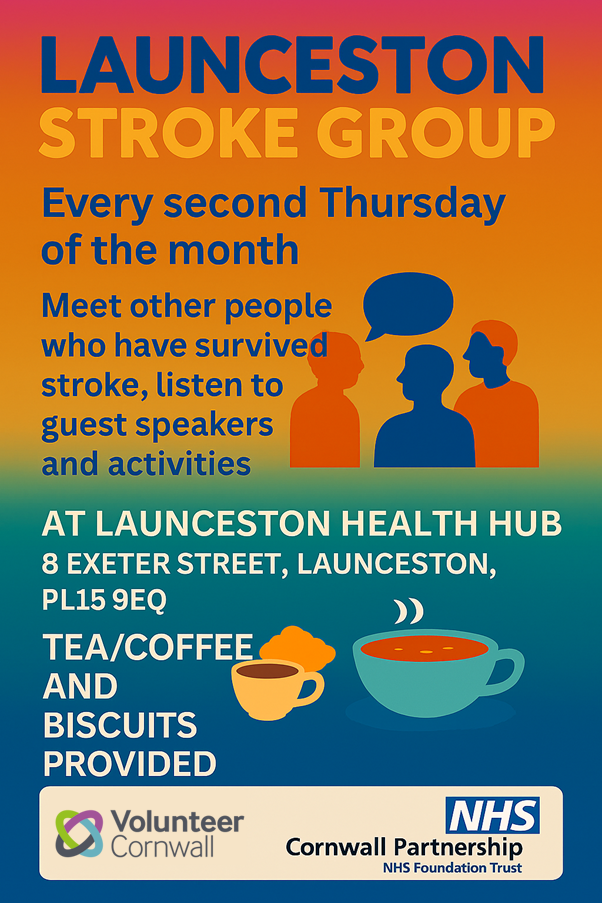
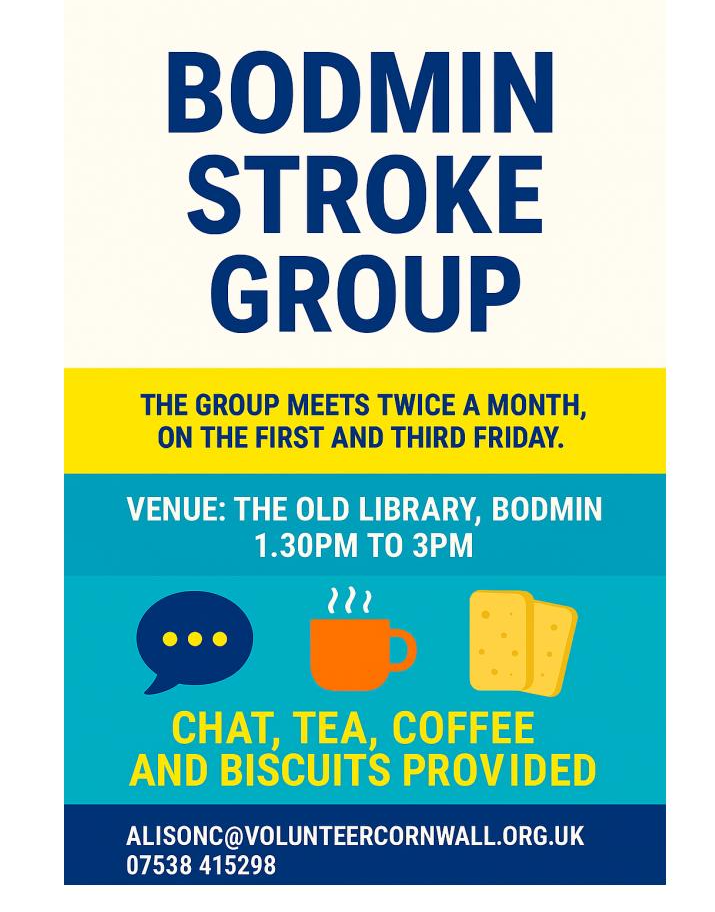
New Stroke Groups in Bodmin and Launceston

If you live near Bodmin or Launceston and have experienced a Stroke and would like to meet other people with similar experiences, we'd love to have you join us.

  • Bodmin Stroke Group: The Bodmin Stroke group meets twice a month on the first and third Friday of each month at the Old Library.
  • Launceston Stroke Group: The Launceston group meets on the second Thursday of the month at the Launceston Health Hub.

Come along and enjoy meeting others over a cuppa, hear from guest speakers, and join in with activities tailored for those who've had a Stroke.

For more information, contact Ally on 07538 415 298 or email This email address is being protected from spambots. You need JavaScript enabled to view it. 


.